Case Study · Org Enablement
Jobs to Be Done Training
- Role
- Lead Designer & Instructional Designer
- Context
- Hyland · 150+ product stakeholders
- Year
- 2021
Outcome
80%
of product teams integrated JTBD into their core process
The org now shares a language for user needs, and that quietly changes how everything gets scoped. Design decisions get made with real user motivation attached, not just feature requirements. The front-end product management team builds alignment with UX earlier in the process, which means less rework and a faster time to market on new features and ideas.
It also changed how design was perceived at the leadership level: from a team that executes on requirements to one that shapes how the org thinks about its users. That shift, made without any positional authority over the teams I influenced, is the case I make for what director-level design leadership looks like.
The problem
Hyland's product org was talking past itself. Product managers, designers, and PMs each described users through their own frame: feature requests, personas, delivery scope, with no shared language for the underlying job a user was trying to get done. Roadmaps reflected that fragmentation. Teams were designing around features, not user motivations, and it was creating real misalignment between design decisions and what users actually needed. I saw this as more than a training gap. It was an organizational one, and I decided to build the case for fixing it.
What I led
Making the case
Before I built anything, I had to convince someone with the authority to let it happen. I took the problem to Hyland's president of product management: here's what fragmented thinking is costing us in misaligned roadmaps and rework, and here's a framework that gives the whole org a shared language for user needs.
That conversation was the real unlock. Once I had executive sponsorship, I had the mandate to build something for the entire product org, not just my own team.
What I built
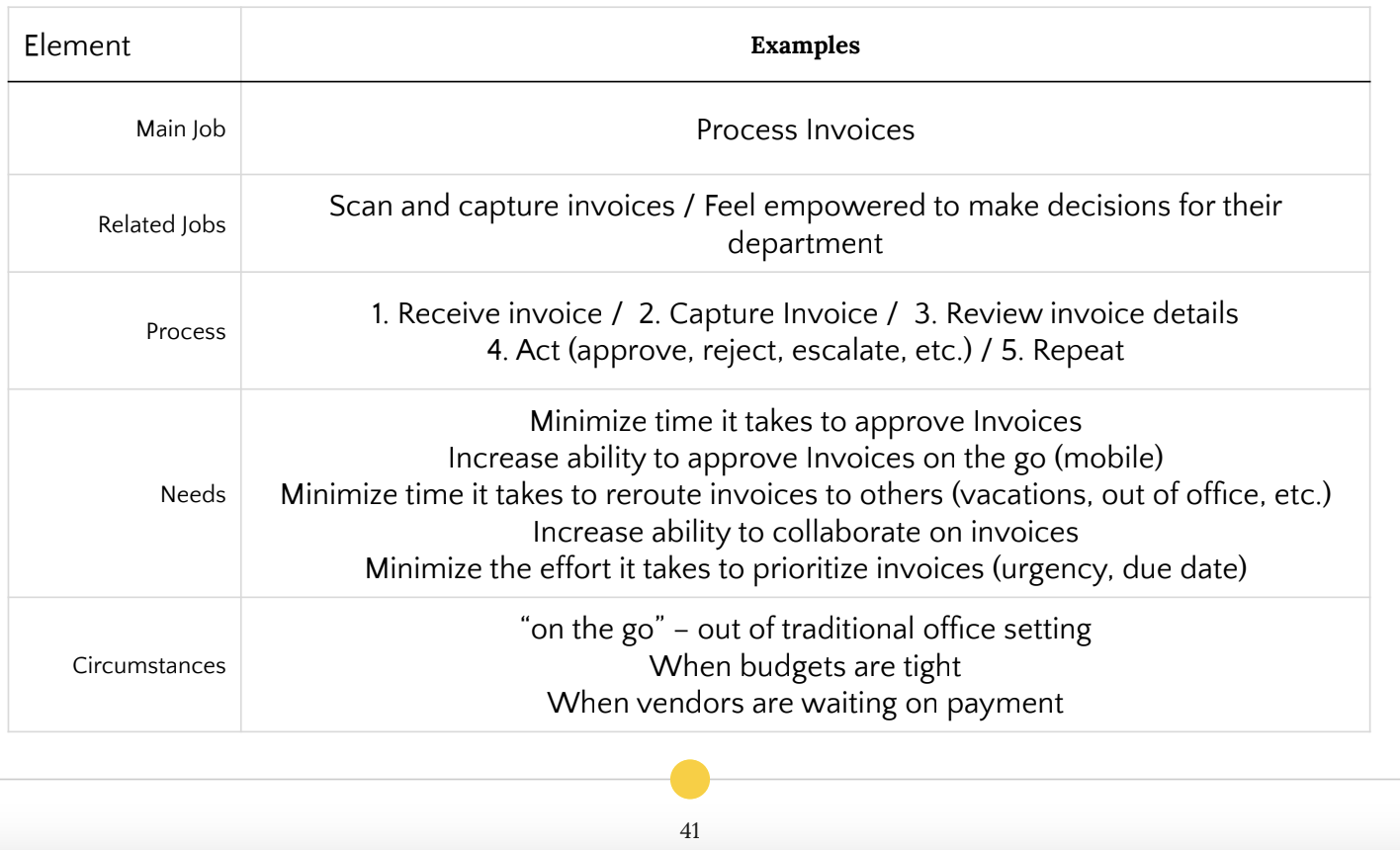
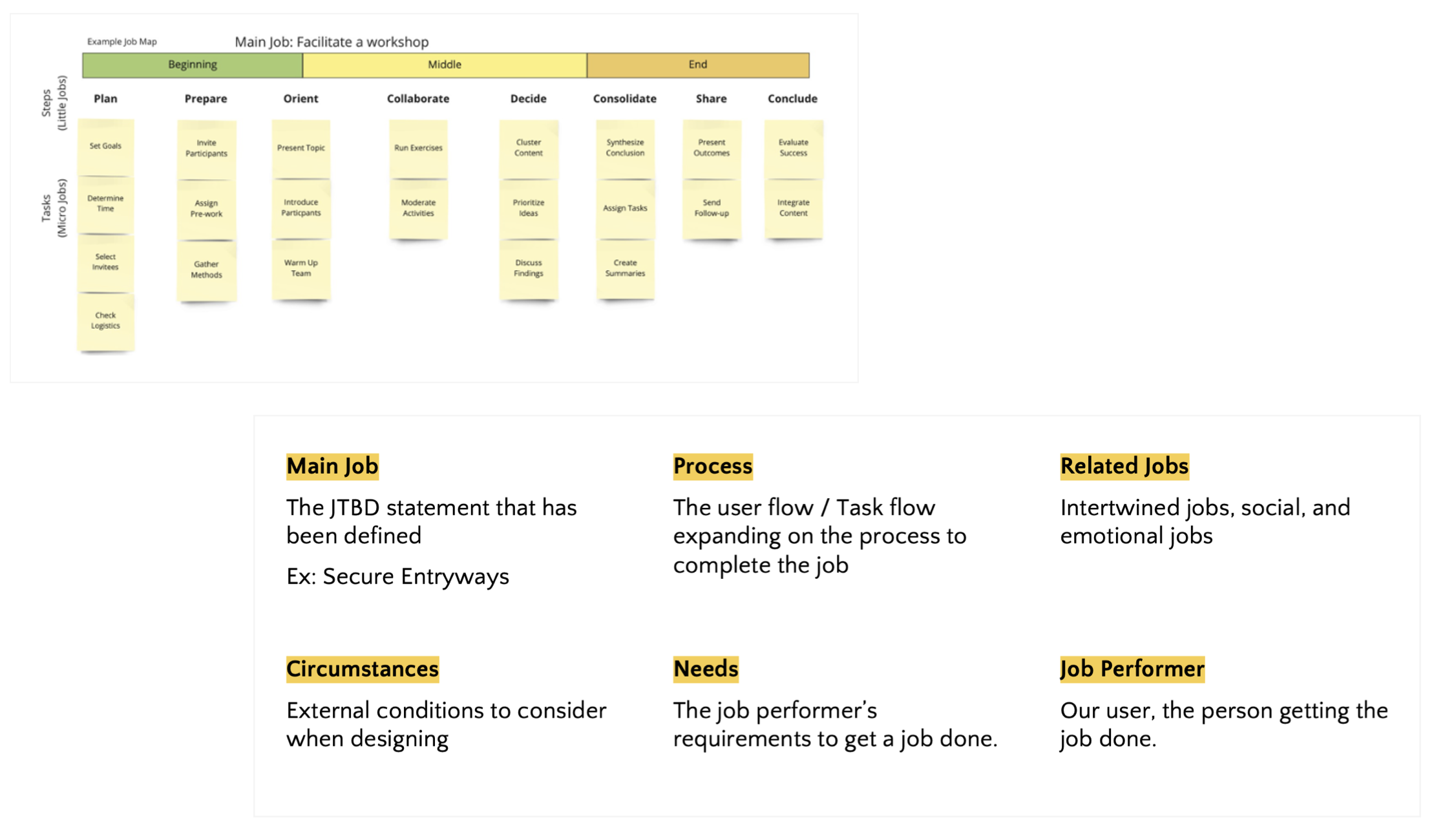
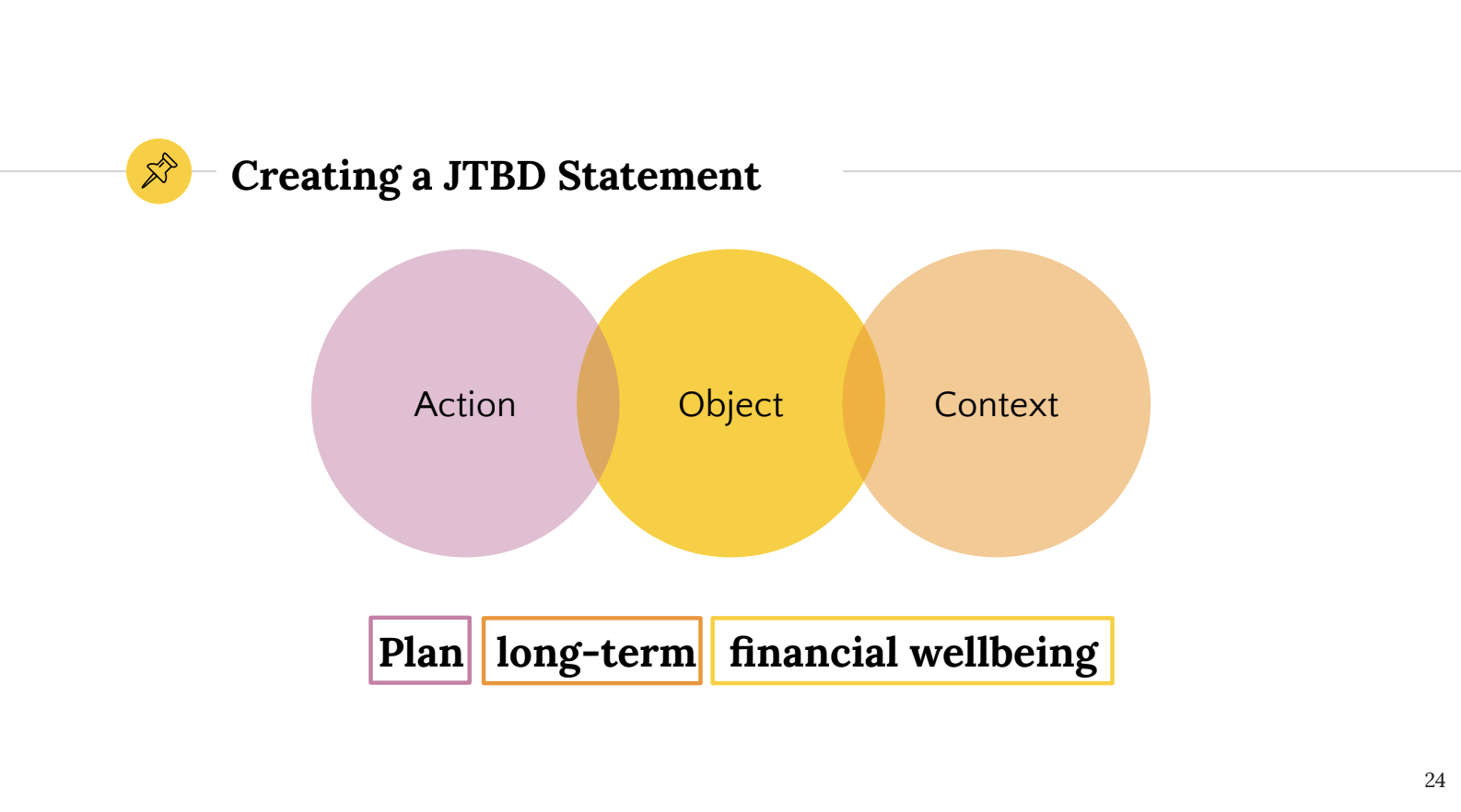
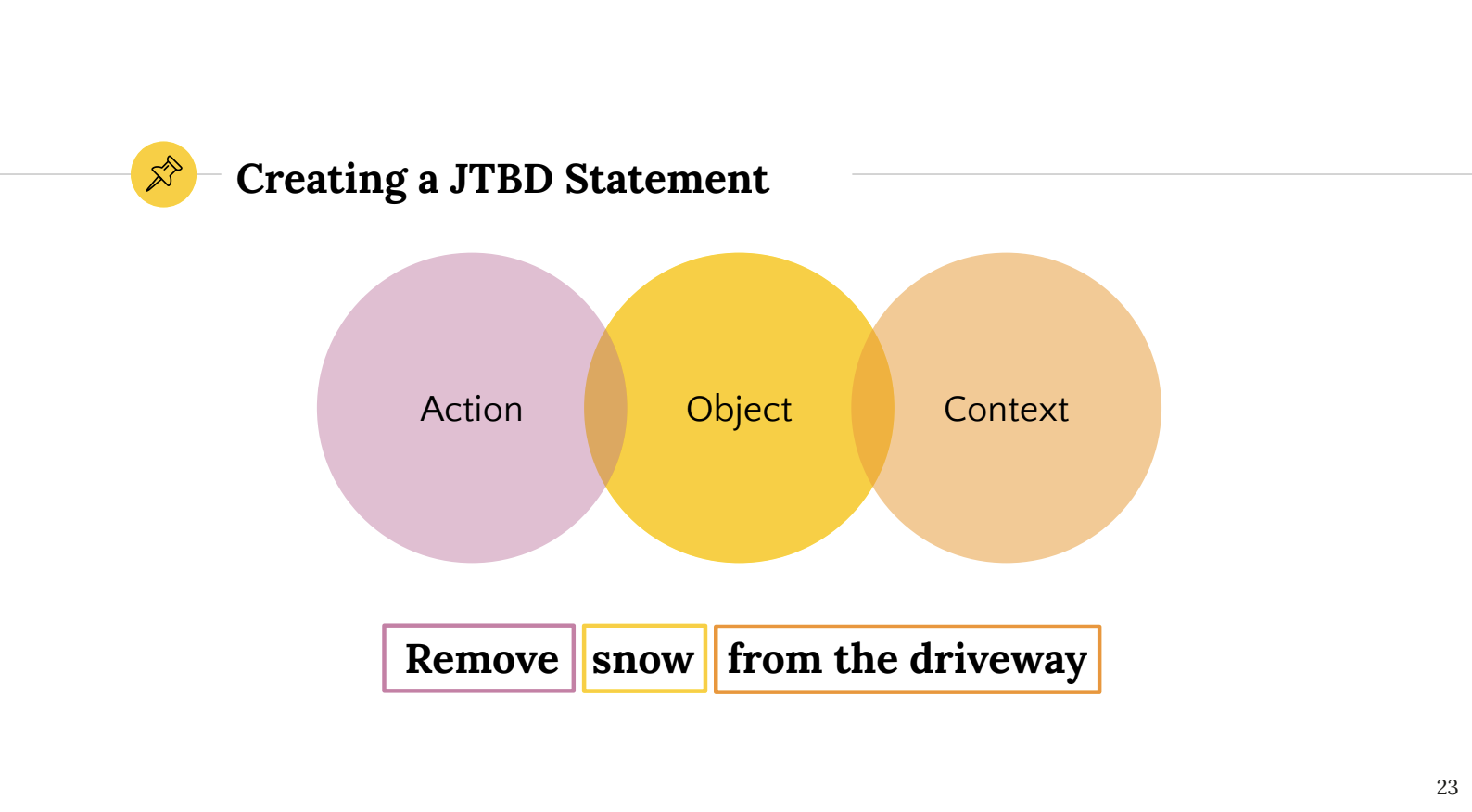
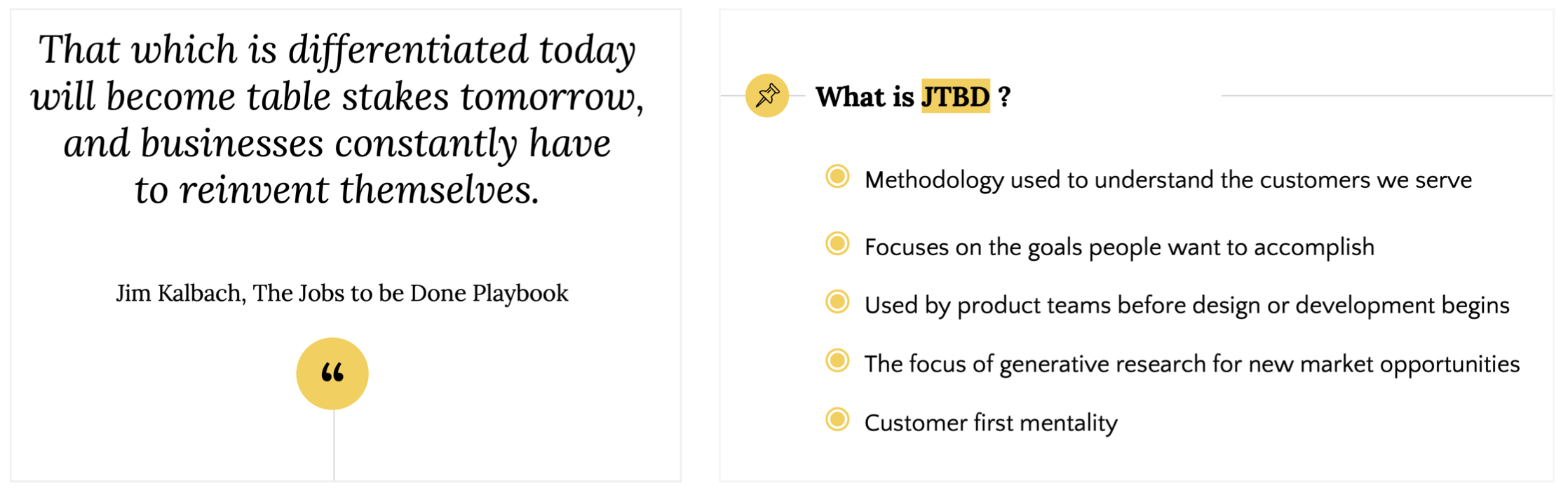
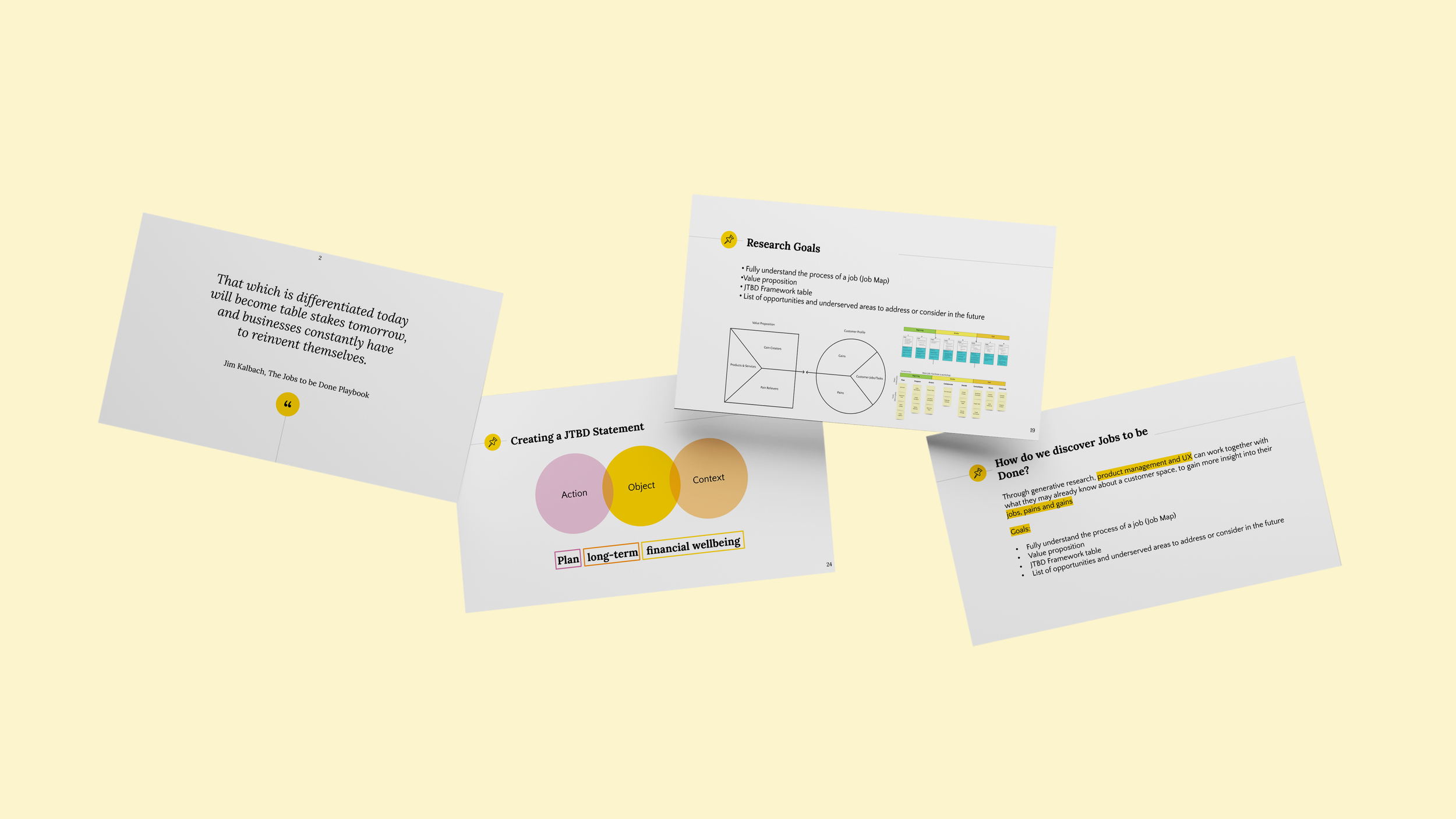
I researched Jobs to Be Done methodology from the ground up and designed a training program to fit Hyland's specific product problems, not a generic curriculum. I built the full curriculum, live facilitation, and exercises pulled from real product problems the org was actively working through, so the framework was immediately useful rather than abstract.
I designed for integration, not attendance. My goal wasn't a training people would sit through once. It was JTBD showing up in story writing, roadmap conversations, and research plans months later. I also built the ongoing support materials teams needed to keep using the framework long after the session ended.
I facilitated the program live for 150+ product stakeholders across the org.
Measuring whether it stuck
I tracked adoption after the training, not just attendance during it. Eighty percent of product teams had integrated JTBD into their core process: writing stories around jobs, running discovery through that lens, prioritizing against real user motivations instead of feature requests.
Gallery